Bellevue and Mercer Island
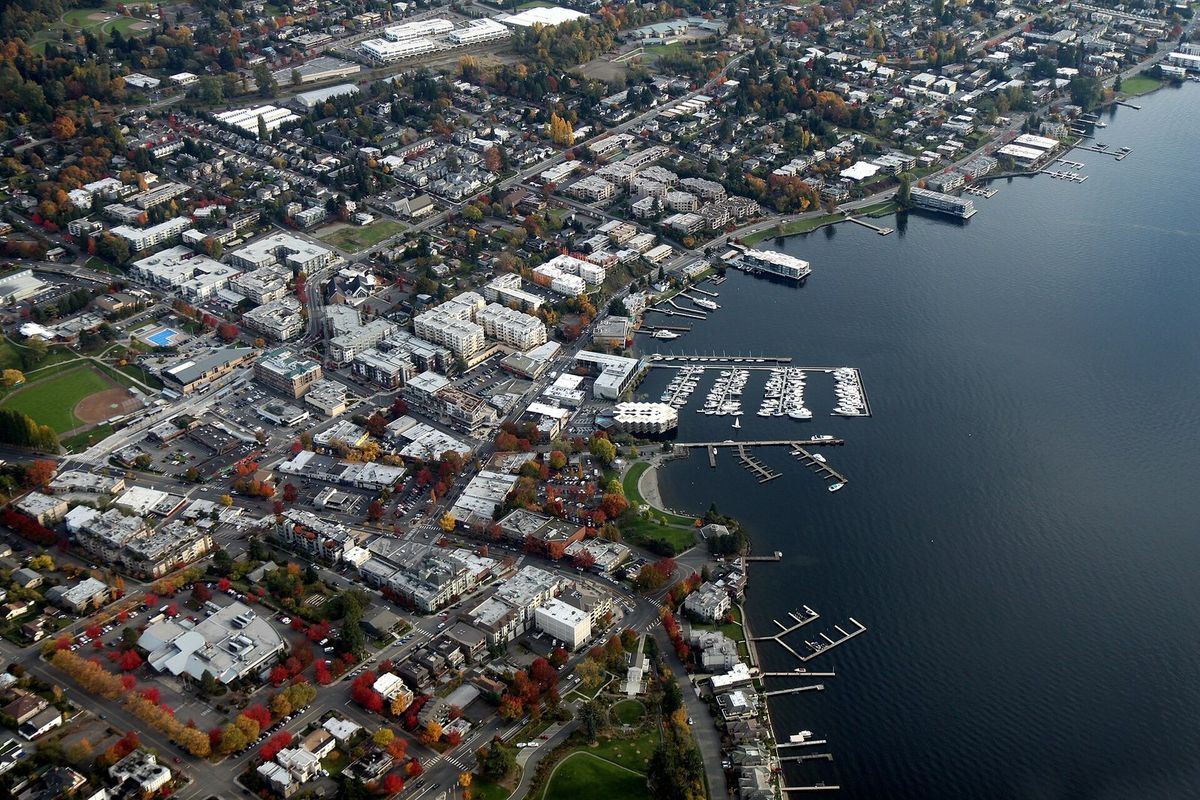
The 1950s through 1980s neighborhoods, Lake Hills, Crossroads, Somerset, Newport Hills, Bridle Trails and the Mercer Island slopes, are large houses with daylight basements and a remodel culture: kitchens opened into living rooms, lower levels turned into suites, and floors run continuously across spaces that used to be separate. Big open runs need expansion breaks placed intelligently; lower levels on slabs need moisture testing and vinyl plank. Downtown Bellevue's towers add building logistics and sound requirements.
Kirkland and Redmond
Juanita, Finn Hill and Kingsgate in Kirkland, and Education Hill and Overlake in Redmond, are 1960s to 1990s houses with carpet-over-plywood main floors that convert easily to laminate or vinyl plank. The new townhouses around Totem Lake and downtown Kirkland have long open runs and shared walls where sound-rated underlayment is appreciated.
Sammamish and Issaquah
Newer construction, 1990s onward, with level plywood subfloors and large footprints. Installs are straightforward and large; whole-house vinyl plank projects of 2,000 square feet and more are common, scheduled in stages so the family can live around them. The Issaquah valley floor has moisture to check; the Highlands and Sammamish plateau generally do not.
Newcastle, Woodinville, Bothell and Kenmore
Hillside houses with daylight basements, wine-country properties with big entries and mudrooms, and the older Bothell and Kenmore housing near the lake. Mudrooms and entries get vinyl plank; main floors go either way.
When you call
Say the city, the rooms and rough footage, what is on the floor now, whether there is a basement or stairs, and whether you are in a condo. You get a call back to book a free measure, the installer's name and L&I registration number, and a written quote before anything is ordered.